






Optimizing Feed Conversion Ratio: Practical Steps for Better Broiler Performance
Feed is the single greatest cost in broiler production, accounting for between 50-75% of total cost. Feed Conversion Ratio (FCR) is calculated as the total feed used divided by the total live weight produced, with a lower value indicating greater efficiency. If FCR increases, the cost goes up; a lower FCR gives a lower cost. The key is good management from pre-placement to processing.
Benchmarking against performance objectives is a good indicator of flock performance, but ensure that records are kept and reviewed to understand what “normal” performance looks like within a given operation, accounting for seasonal effects. If deterioration in FCR is observed or if FCR suddenly changes, confirm that the FCR values are accurate. Inaccurate plant scales can mislead, errors in feed delivery can misrepresent feed volumes, and theft or unreported losses of birds or feed can dramatically affect performance.
Chicks Matter
FCR starts before chicks arrive on the farm. Overheating embryos in late incubation can damage gut development, reducing nutrient digestion and absorption later in life. Poor temperature or ventilation during transport can harm early development and potentially final performance. Once the chicks are placed, optimize feed intake and gut development by ensuring they are comfortable based on their behavior, with adequate, draft-free air exchange, good access to feed and water, and crop fill is on target at >95% by 24 hours after placement.
Feed Management: Reduce Waste, Maximize Intake
Anything that hinders feed intake or increases feed wastage will worsen FCR. Make sure there is sufficient feeder space and that the feeder height is adjusted daily so the bottom of the feeder is level with the broilers’ backs. Avoid overfilling the feeders to reduce spillage. Good-quality pellets will result in better FCR, but pellet size is important: pellets larger than 4 mm in the grower and finisher diets can reduce intake. Poor physical feed quality, particularly after transportation and distribution, can lead to particle separation in feed. It requires more energy to consume fine particles than pellets, and the fines move through the digestive system more rapidly, resulting in poorer digestion. The fines must be consumed because they tend to have a higher mineral content. From days 10–12, switch off the feeders for a short time each day to encourage system cleanup. Ensure birds are not without feed for any extended period.
Since water and feed intake are related, it is important tomonitor water consumption. If water intake is low, feed intake will also decrease, slowing growth and increasing FCR. Make sure that water is cool and clean, always accessible, and that there is sufficient drinking space.
The effect of the environment
Chickens are most efficient when they are in their comfort zone. This temperature changes as the birds age and is influenced not just by environmental temperature but also by humidity and wind speed. Outside their comfort zone, chickens will use the energy in their feed to keep themselves warm or cool. When birds are hot, they consume less feed and more water. This reduces the growth rate. In hot climates, encourage birds to eat during cooler hours, use more digestible feed ingredients, and ensure high-quality pellets.
Feeding Program: Match Nutrition to Age
Nutritionists aim to match the chickens’ changing demands for amino acids and energy with the feed that is provided. If these demandsare not met, more feed will be consumed to compensate, growth will slow, and FCR will worsen.Increasing nutrient density can improve FCR, but it is not always profitable. Always consult a nutritionist and consider the margin over feed cost in a defined market when evaluating changes in nutrient density.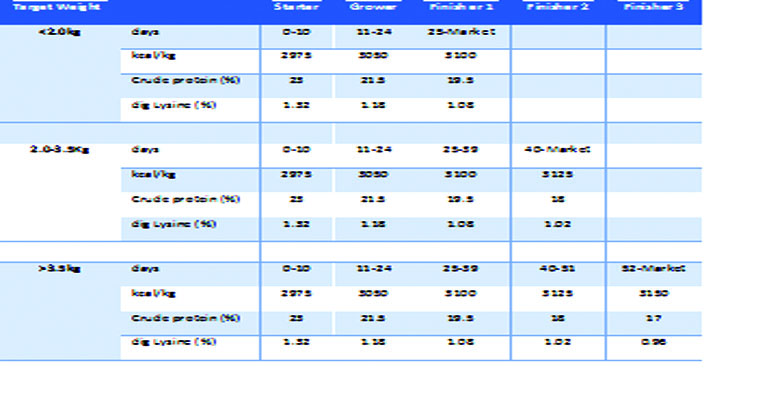
Ingredients that do not meet expected nutritional values or contain mycotoxins can negatively affect performance. Incorrect mixing, cross-contamination, and poor grinding can all affect the outcome, too.
Losses and Sickness
Deceased birds have consumed feed but do not contribute to the final live weight, so losses, especially those that occur late in the flock cycle, have a big impact on FCR. Conditions such as necrotic enteritis, dysbacteriosis, and coccidiosis, which directly affect gut integrity and function, will significantly impact FCR. Effective cleaning and disinfection, along with biosecurity and vaccination protocols, must be in place to protect flock health.
Pre-Processing: Avoid Excessive Shrink
Birds lose weight when off feed, and the rate of weight loss may increase with prolonged feed withdrawal. Feed is typically withdrawn 8–10 hours before processing, including time for catching and transport, to ensure an empty gut at processing. Excessive withdrawal time will result in lower reported weights and poorer FCR.
Poor FCR is expensive. It is usually caused by multiple small problems rather than by a single big issue. Any factor that reduces feed intake, growth, or the health and welfare of chickens can have significant economic impacts. Ensure communication and coordination occur throughout the production chain to address issues that can lead to poorer FCR.